

For admissions teams, May 1 isn’t the finish line.
It’s the moment risk begins.
You’ve built your class, hit your deposit goals, and reported early wins. But between May and August, a portion of that class will quietly disappear.
Not because of affordability.
Not because of academics.
But because your institution lost connection with them at the exact moment it mattered most.
Summer melt isn’t just a student behavior problem. It’s a visibility and engagement problem.
The silent issue: you can’t fix what you can’t see
Most admissions teams are operating with a blind spot post-deposit.
You know:
How many students deposited
What your historical melt rate looks like
But you don’t know:
Which students are at risk right now
When engagement starts to drop
Where your team should focus their time today
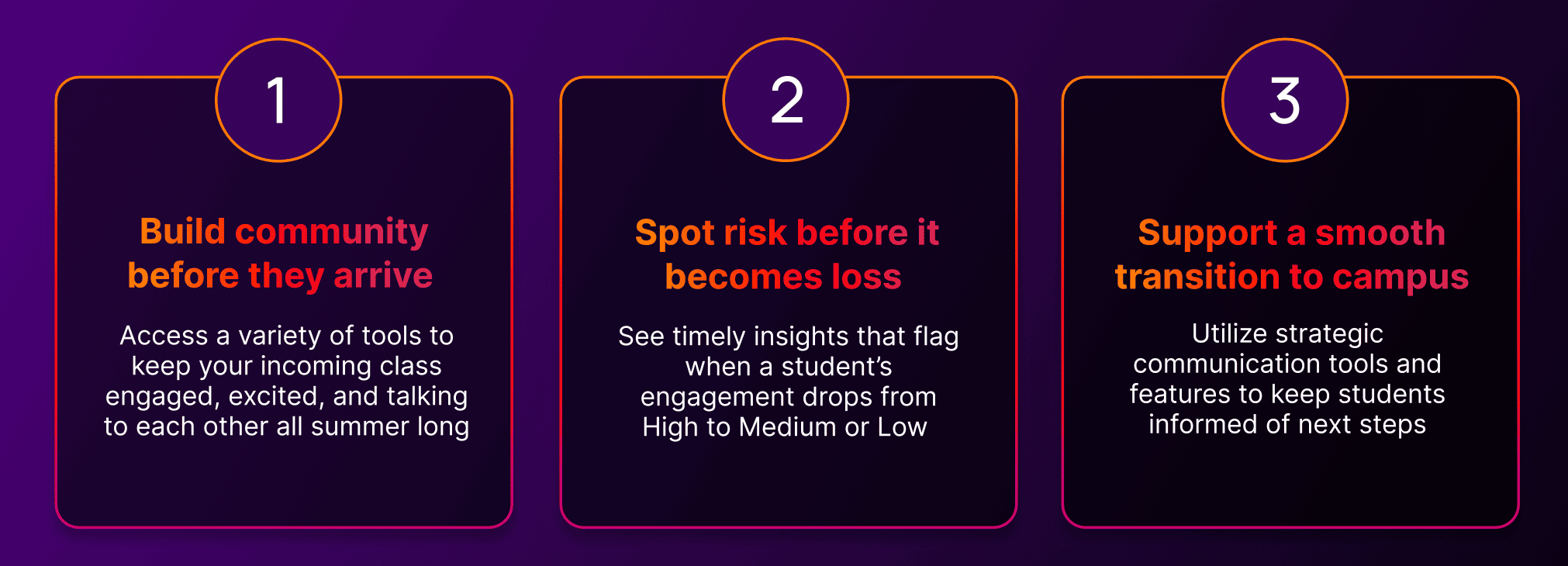
With ZeeMee, visibility + connection =

What high-performing admissions teams do differently:
- Build engagement that sustains commitment
- Identify risk early, and act on it
- Direct team effort and resources where they’ll have an impact
What your competitors are achieving:
Washington State University saw 9 out of 10 incoming students engage in summer-long orientation experiences
Lake Forest College saw 87% of admitted students connect in community before committing
University of Vermont saw 48% lower melt rates for students who connected in ZeeMee
Saint Louis University saw 50% of its enrollment gap closed in one week using ZeeMee community insights
The shift admissions leaders need to make
From reporting melt -> preventing melt in real time
From broad communication -> targeted intervention
From team activity -> team impact
The bottom line: you don’t lose students because they said no. You lose them because you lost visibility and connection after they said yes.
Want to learn more?
Check our our pre-recorded webinar: May 1 to day 1: See how ZeeMee tools can reduce your melt by 50%
In this session, we explored why deposited doesn’t always mean decided, and what happens between May 1 and move-in day when students quietly disengage, and teams often don’t realize it until it’s too late.