

Direct admission is helping students discover more college options and giving institutions new ways to reach prospective students.
Common App reported that more than 820,000 high school seniors received direct admission offers from 215 participating institutions through its 2025–26 program.
For enrollment teams, it also changes how the student journey begins. A student may receive an admission offer before exploring the institution, speaking with a counselor, or expressing interest in attending.
What is direct admission?
Direct admission allows institutions to offer students admission based on available information, such as GPA, coursework, residency, or other academic qualifications.
Rather than starting with a traditional application and waiting for a decision, students learn earlier that an institution could be an option for them. Requirements vary by program, and some offers require additional steps or verification before admission is finalized.
Why are colleges adopting direct admission?
Helping students discover more options
Direct admission gives institutions another way to introduce themselves to students beyond their existing inquiry pool.
For students, an offer can bring an unfamiliar college into consideration.
Making the process more accessible
Application requirements, fees, and uncertainty can make the college search feel overwhelming. Direct admission programs can reduce some of those barriers and give students greater confidence about their options.
For a student wondering whether college is within reach, an admission offer can provide encouragement to keep exploring.
A larger admitted pool requires a clearer picture of interest
Direct admission can expand the number of students your institution has an opportunity to recruit. Within that population, students may be at very different points in their college search. Some are actively considering your school. Others are learning about it for the first time.
For enrollment leaders, the challenge is deciding how to support that range of students with the staff and resources available.
Admission status tells you who has an offer. Engagement adds context about how the relationship is developing. A student asking questions, connecting with potential classmates in ZeeMee, or exploring campus through a visit gives your team something specific to build a conversation around.
Together, those signals can help counselors decide where personal outreach may be useful and what to discuss when they connect. Students with less visible activity still need opportunities to explore, ask questions, and receive support.
Tracking the direct admission population separately can also help institutions evaluate their approach over time:
- How many students engage after an offer?
- How many submit their deposit and enroll?
- How do those outcomes vary by program, geography, or student population?
- Where does engagement slow, and what questions remain unanswered?
That gives teams a clearer basis for adjusting communications, student support, and recruitment resources throughout the cycle.
Building engagement into your direct admission strategy
- Make the offer clear. Explain why students received it, what it means, and any remaining steps.
- Address affordability early. Provide scholarship information, estimated costs, and access to financial aid guidance.
- Give students a place to connect. Help them meet potential classmates, hear from current students, and explore shared interests.
- Use engagement to guide outreach. Build on students’ questions and interests so counselors can make each conversation more relevant and useful.
Where should your team start?
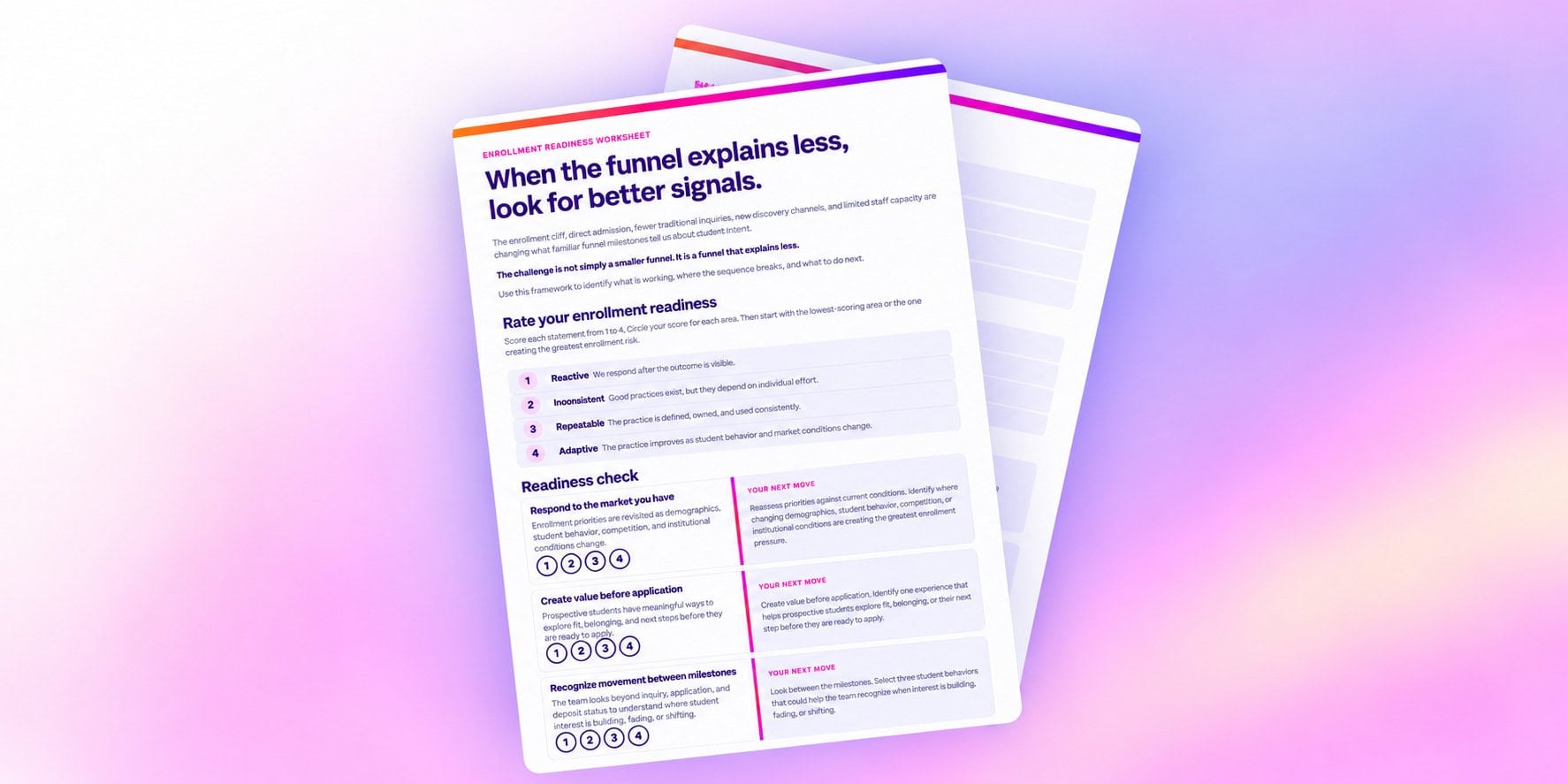
Our Better Signals Action Guide helps you assess how your institution recognizes student interest and turns that insight into action. Use it with your team to identify one area to strengthen.
How ZeeMee helps turn an offer into a connection
ZeeMee Community gives students a place to explore the people and experiences behind their admission offer. They can meet potential classmates, connect with current students, explore shared interests, and ask questions that help them picture life on campus.
For a student who is just getting to know your institution, those connections give them a reason to keep exploring.
For enrollment teams, that participation adds context beyond admission status, email engagement, or visit history. Student-shared interests and engagement within the community can help teams better understand what students care about and how their connection to the institution is developing.
ZeeMee’s RISE brings those engagement signals together with institutional data to help teams understand student interest and prioritize outreach.
A counselor can use that context to start a more relevant conversation, connect a student with a helpful resource, or offer support as they weigh their options. Enrollment leaders can use the broader picture to identify patterns and guide their team’s attention.
Direct admission creates an opportunity to build a relationship. ZeeMee helps institutions develop that connection and better understand how student interest evolves.